


CPU & von Neumann architecture
A program is stored in memory and its instructions are executed by a processor. Following one instruction connects the parts of the machine.
Reference age · UK/US 16+ · East Asia 16+Open modelA program instruction involves memory and a processor; graphics and network data also need their own hardware. What does each part of a computer do?
A program is stored in memory and its instructions are executed by a processor. Following one instruction connects the parts of the machine.
Reference age · UK/US 16+ · East Asia 16+Open model
Sending a photo to a printer requires a network interface and an address for the next handover. The card’s hardware, the bits and bytes of a MAC address and the handover at a gateway each explain part of that transfer.
Reference age · UK/US 16+ · East Asia 16+Open model
Brightening a picture means doing similar calculations for many pixels. Which can run together, and which must wait for data or another result? The graphics chip, its memory and its cooling hardware all support this work.
Reference age · UK/US 17+ · East Asia 17+Open modelHow does an algorithm solve a problem, and how much work does it need?

The same numbered cards can be put in order in different ways. Five sorting methods leave different records of comparisons and moves, giving us work we can count and compare.
Reference age · UK/US 16+ · East Asia 16+Open model
Whether cards are ordered changes how we can search them. In an ordered list, one comparison can rule out half the candidates. Without that condition, we may need to check them one by one.
Reference age · UK/US 16+ · East Asia 16+Open model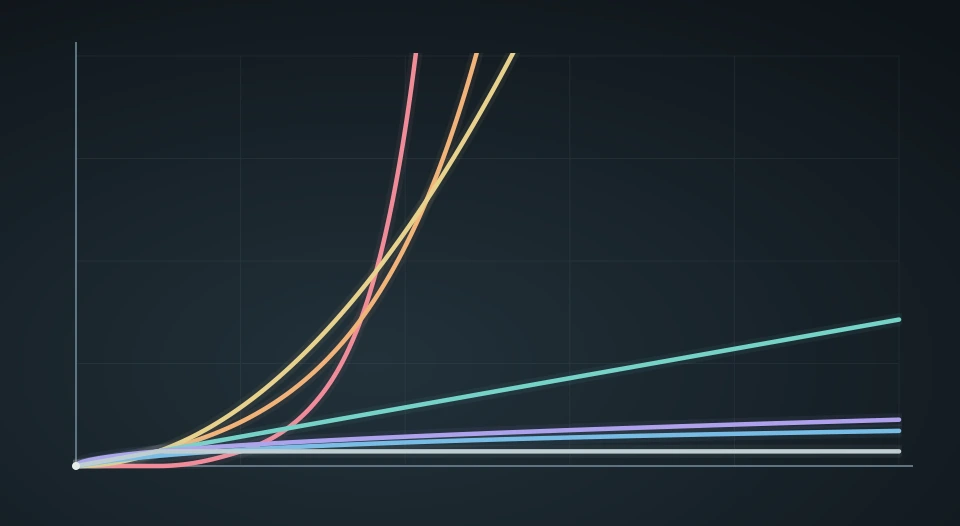
Some algorithms need much more work as the data grows. Counting the steps of a search makes the difference visible.
Reference age · UK/US 17+ · East Asia 17+Open modelHow do words and images become numbers a model can calculate with? Training data, parameters and predictions show what machine learning involves.

How can a machine predict the next word or turn noise into an image? Counting, numerical representations of words and attention make parts of a language model’s calculation inspectable. Diffusion models show a different process for generating images.
Reference age · UK/US 17+ · East Asia 17+Open model